
How to get to the Dune du Pilat?
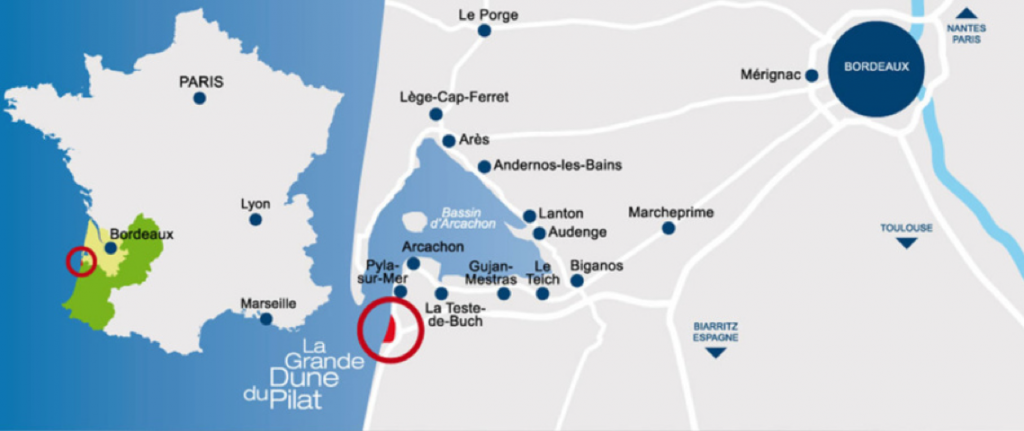
To get to the Dune du Pilat by car from Bordeaux, take the A1630 towards Bassin d'Arcachon / Biscarrosse, exit via D259 towards Dune du Pilat / Biscarrosse.
Itinerary paragliding from one of the Pilat mountains on Google Maps .
By Boat – It is possible to access the Dune by your own means or with the maritime shuttles of L' Union de Bateliers Arcachonnais .
By Bus – From Arcachon train station, take line 1 towards La Salie beach, get off at the Plage du Petit Nice stop and not Dune du Pilat. (25 min)
By bike or on foot – Numerous footpaths and cycle tracks allow you to pass through the Dune du Pilat . More information at: lesbicyclettesbleues.com
By train , from Bordeaux station, take the TER 32 Bordeaux-Arcachon line and get off at Arcachon station (50 min).
By plane , from Bordeaux-Mérignac Airport, go to the departures area of Hall B, in order to take the Shuttle 30' direct which will take you to Bordeaux Saint Jean train station (30 min).
How to find us:
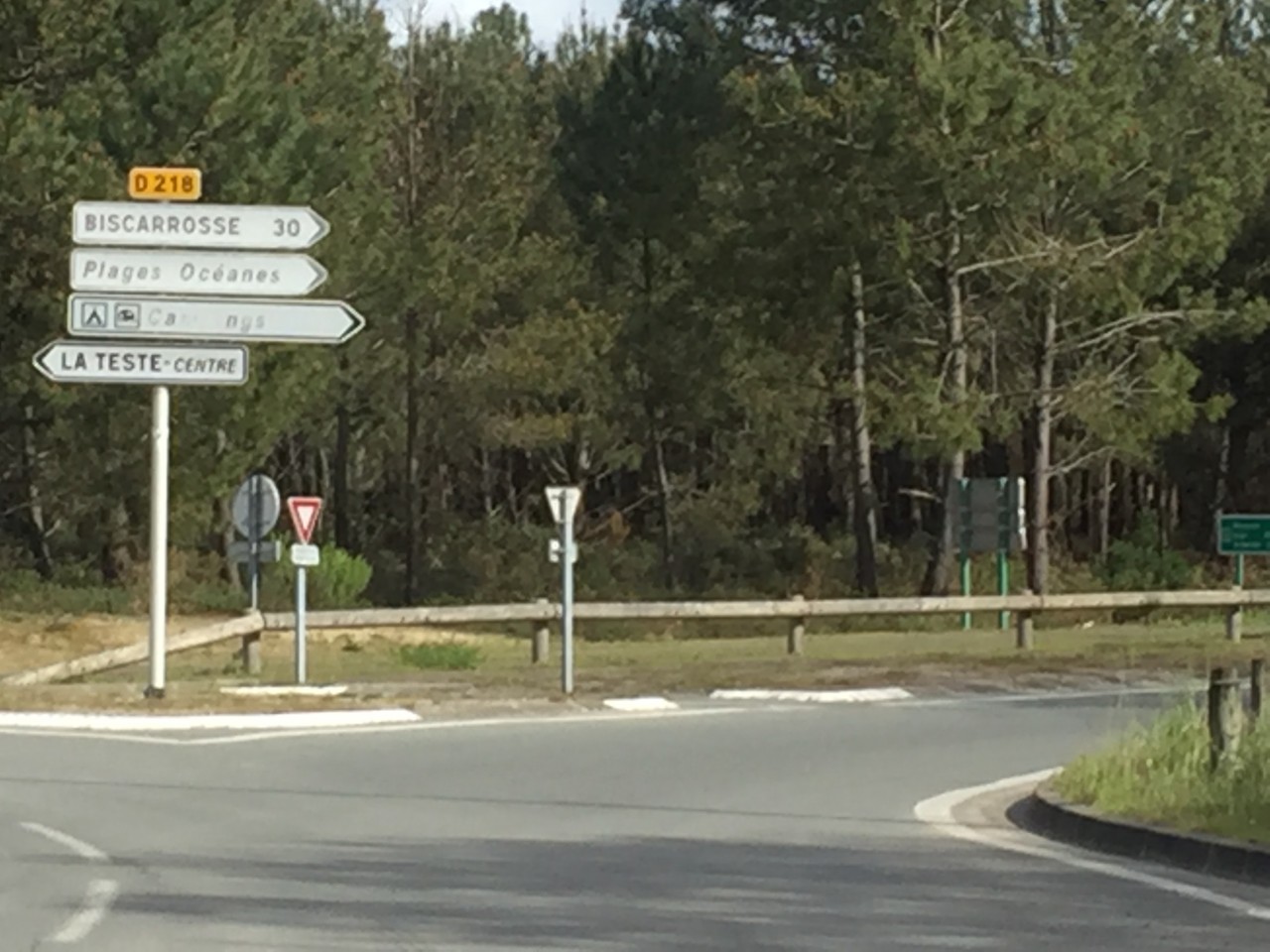
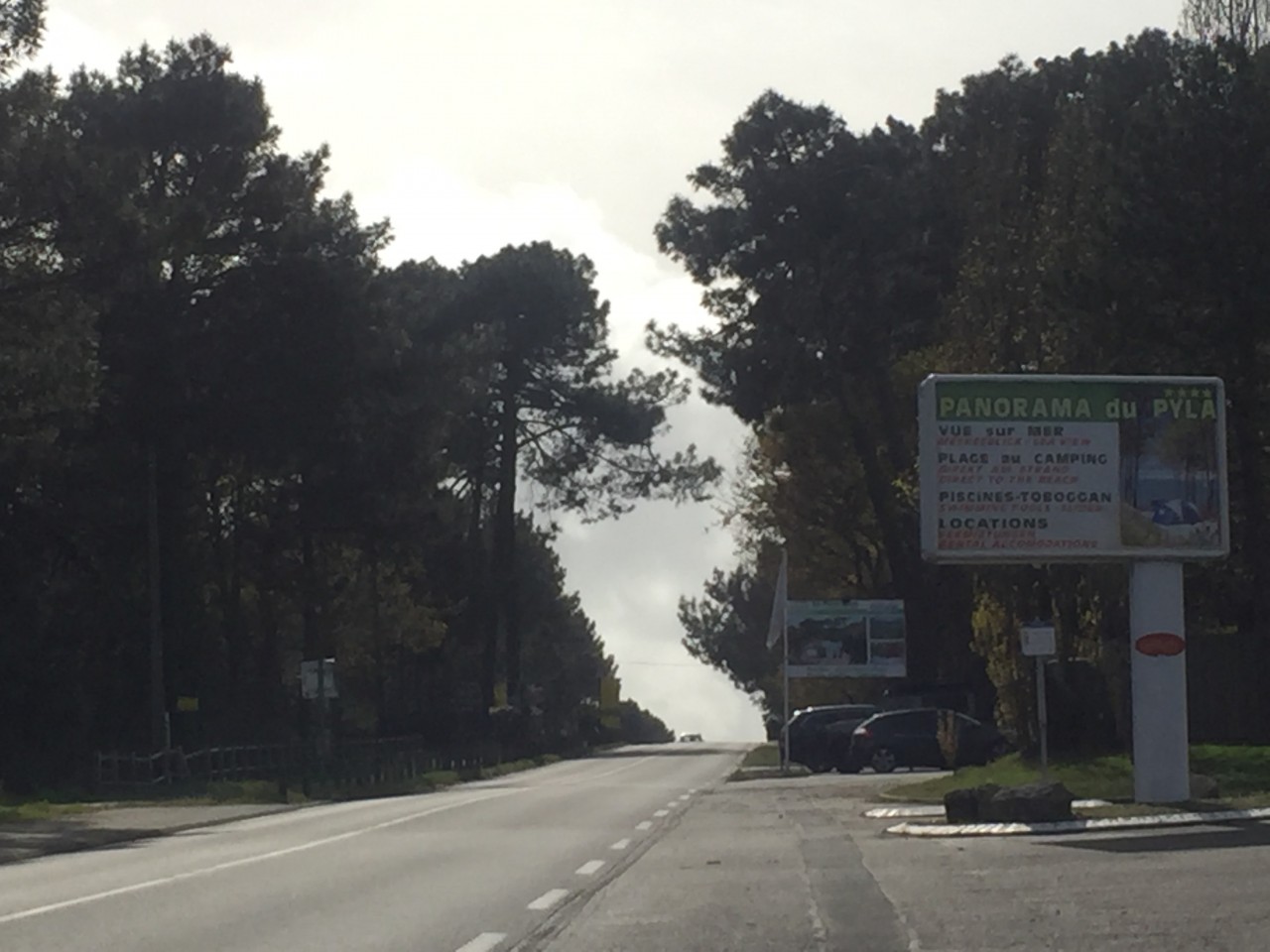
Once you arrive at the roundabout of the From Dune Du Pilat , take the direction of Biscarrosse and continue leaving all the campsites behind you.
At the Panel Petit Nice beach , turn right.


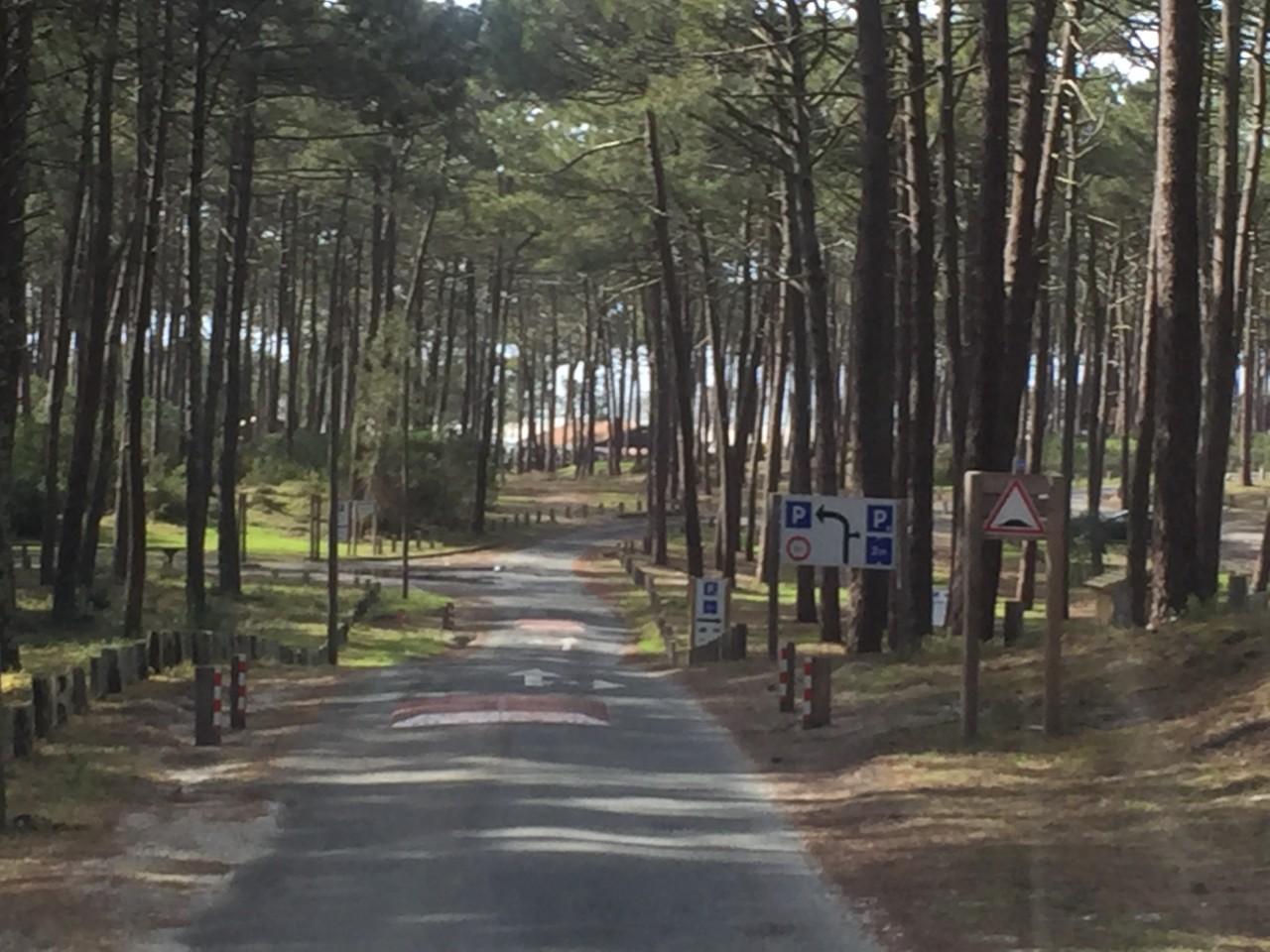
Arriving at the Petit Nice beach parking lot at the level of restaurant " Le Petit Nice ", meet on the beach via the access path which is opposite the Lifeguard Station.
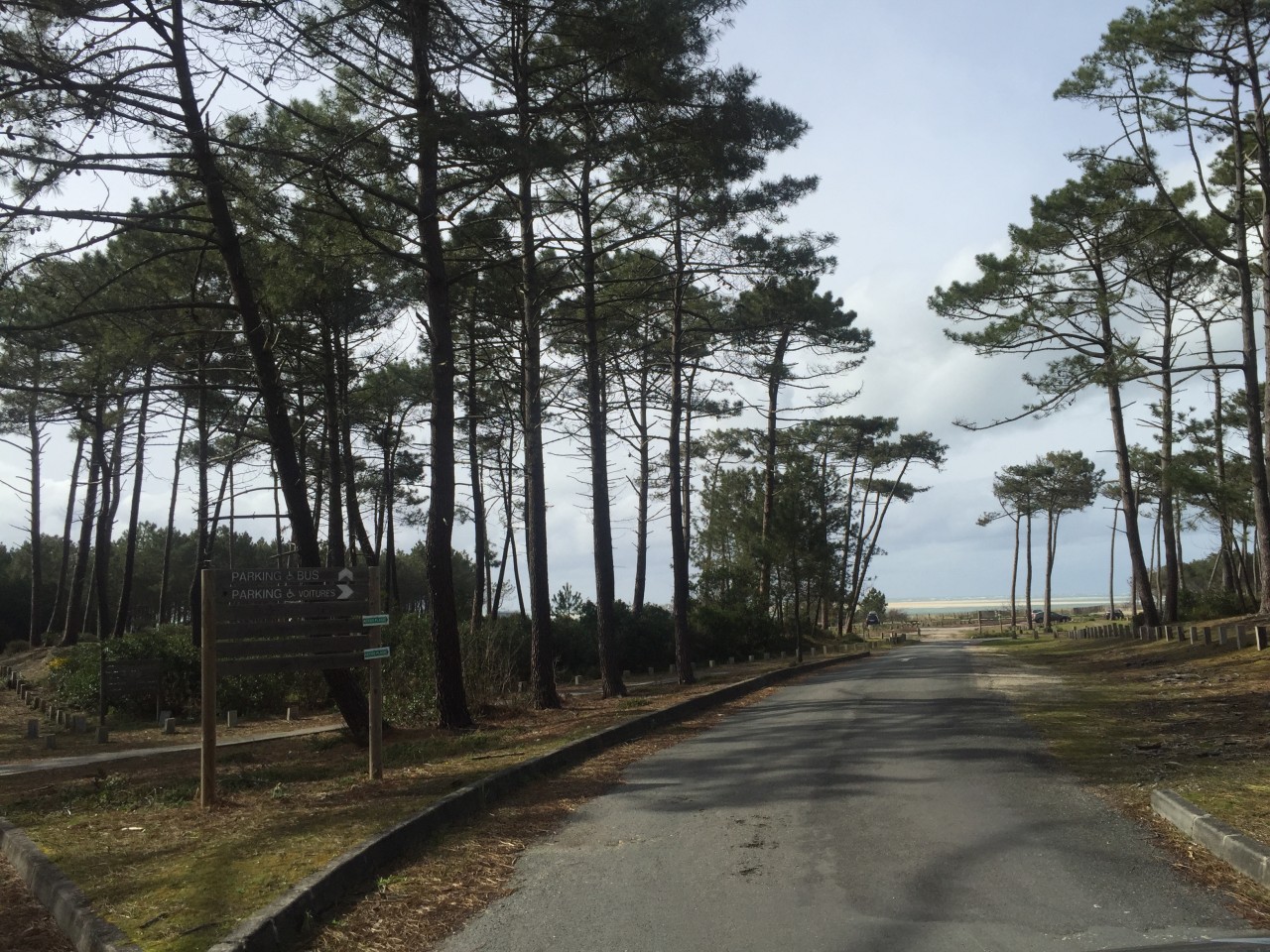
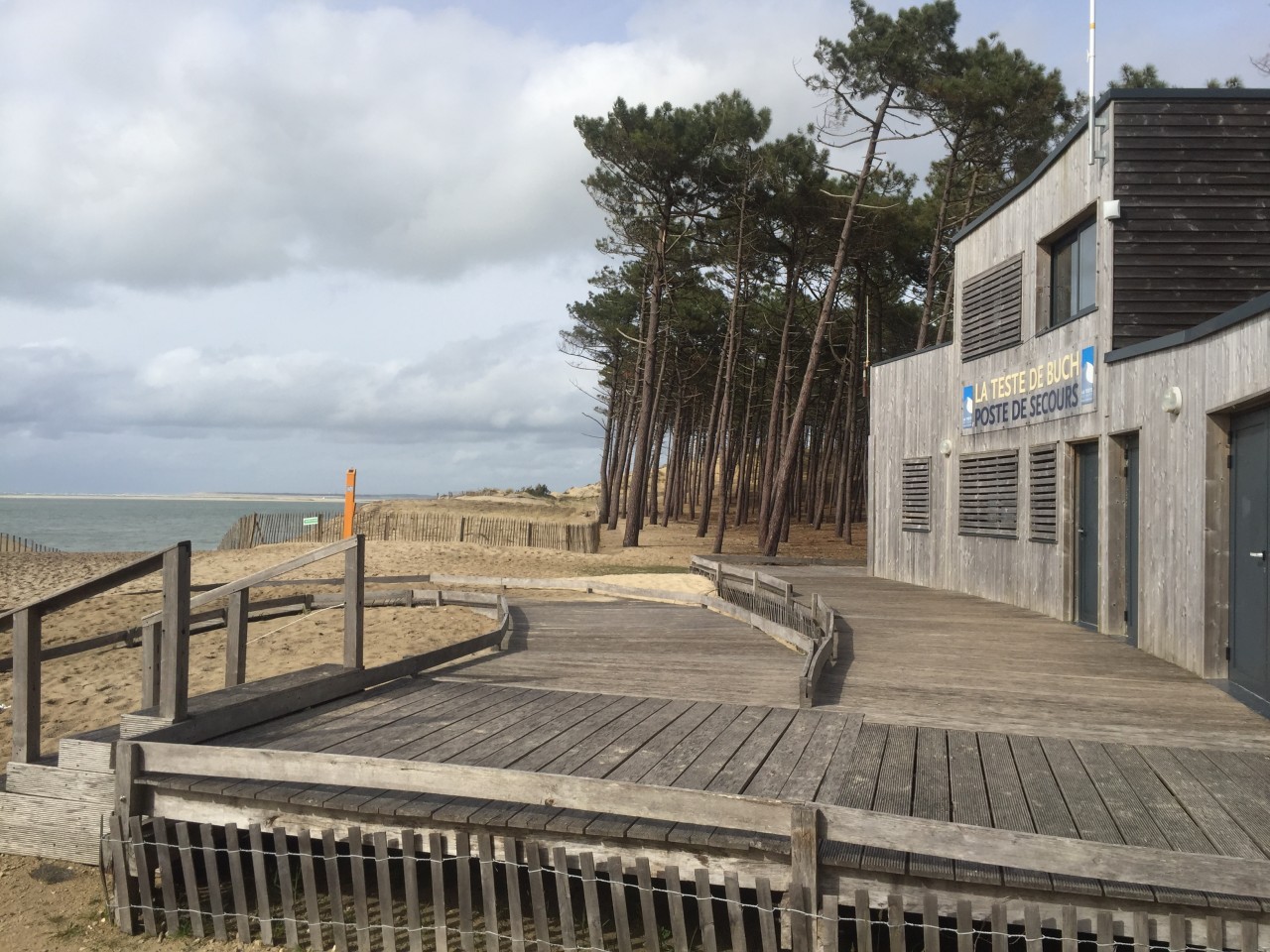
Once you reach the beach facing the ocean, head to your right... Blockhouse World War II sites covered in graffiti (10-15 minute walk). Tip: walk along the water's edge; the sand is usually harder there.
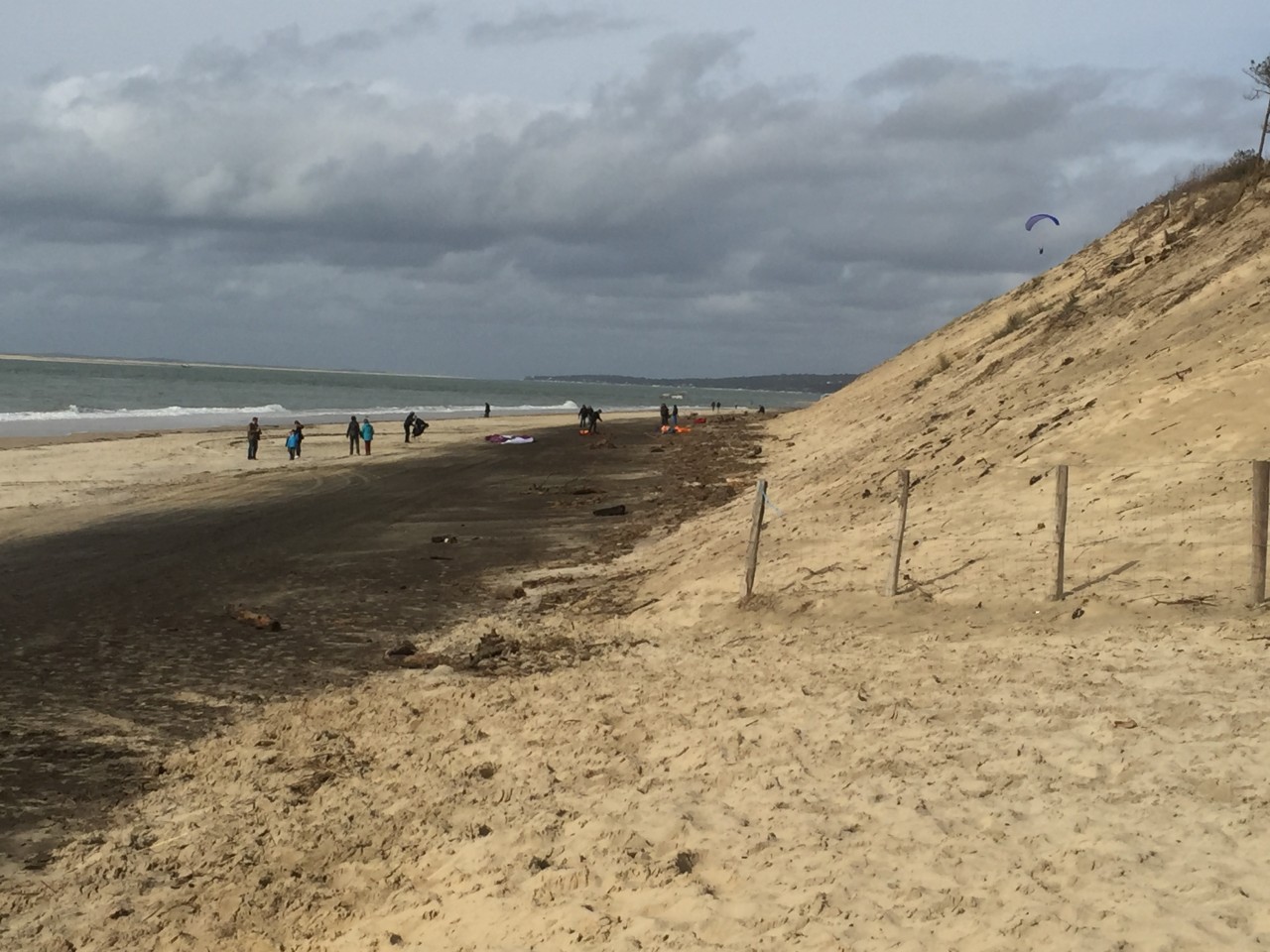
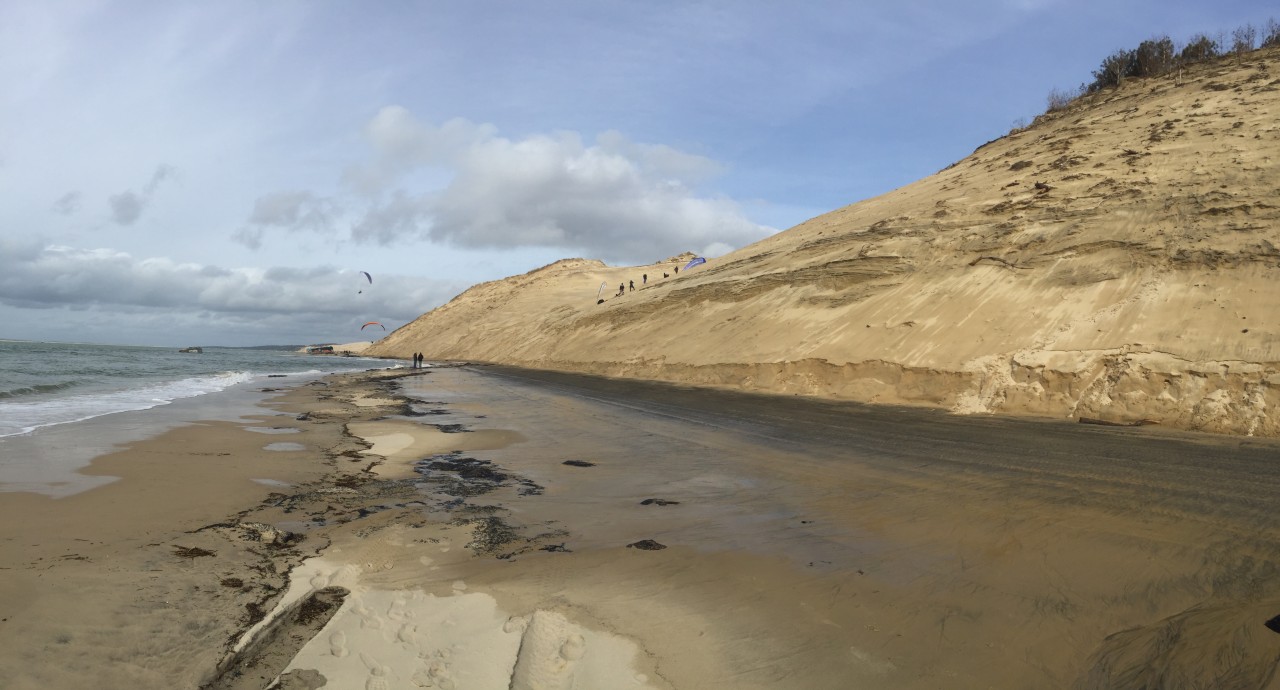
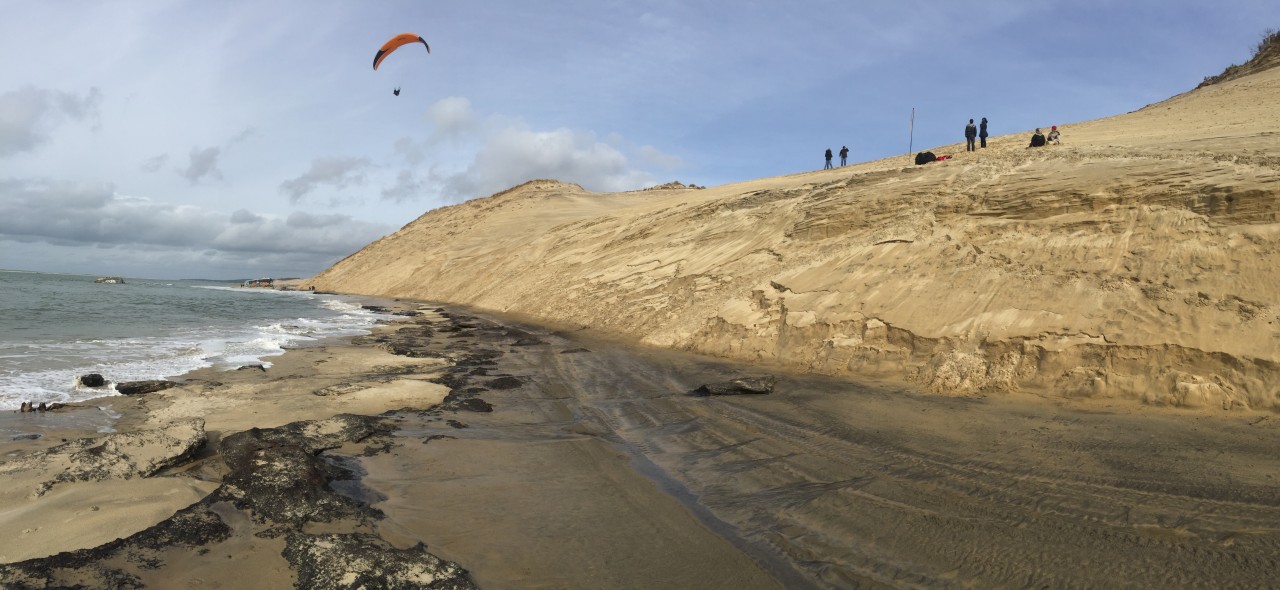
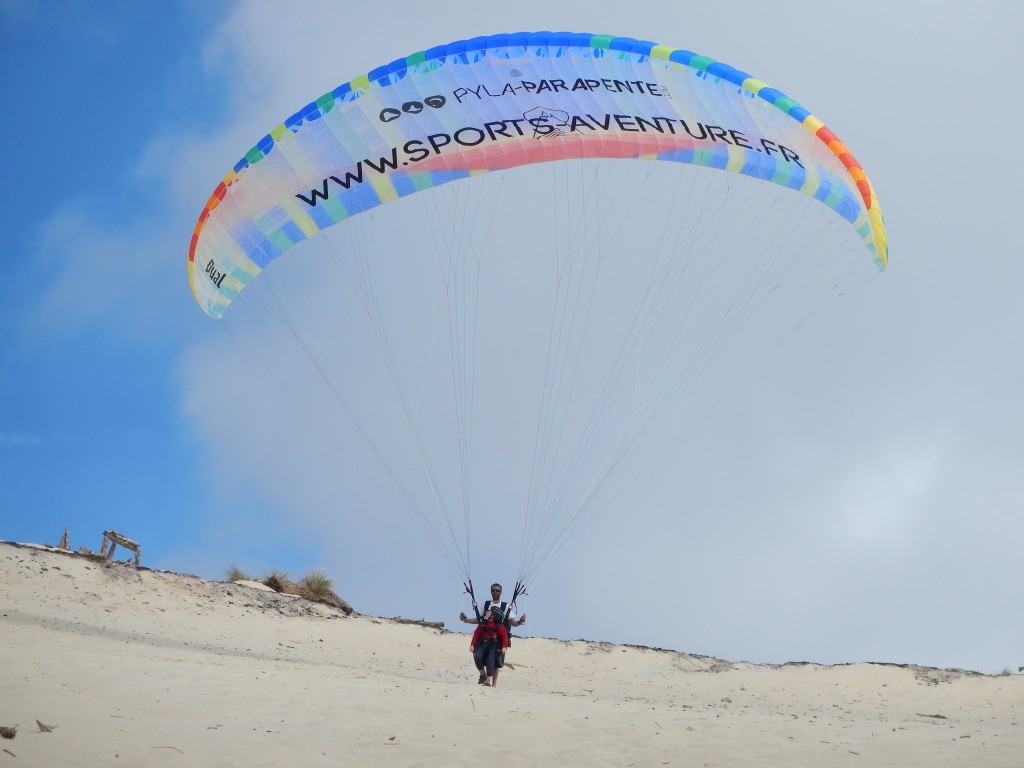
100 meters before the bunkers, on the right in the middle of the dune, is the West take-off point, and after the bunker, the North take-off point, where a Oriflamme bearing the image of Pyla Paragliding will tell you the meeting point. If we are flying (see photos of our sails below), please wait for us at the pennant.


Origin and History of the Dune of Pilat:
Height (between 100 and 115 m), length (2.7 km), visitor numbers (more than one million visitors), number of grains of sand (60 million cubic meters)... at the Dune, everything is subject to superlatives!
This imposing mass of sand, constantly moving inland and encroaching on the forest by 4 to 5 meters every year, is a natural archive that allows us to trace 4000 years of history.
As you've probably gathered, the Dune is unique, and that's precisely why it must be preserved and respected. It's a fragile natural site before it's a playground that anyone might be tempted to appropriate.
Water, sand and forest blend together to form this exceptional place. From the top of the Dune du Pilat, a beautiful landscape lesson is offered to the visitor.
The ocean is the primary attraction to the west. Depending on the tides, it is punctuated by the sandbanks of the Banc d'Arguin, the channels of the Arcachon Basin, and the long sandy spit of the Cap-Ferret peninsula. To the north, the lagoon of the Basin unfolds.
To the east lies the forest of La Teste-de-Buch, a verdant ocean with highly diverse and complex legal statuses. The local forest, which has regenerated naturally for centuries because it has not been exploited for timber production, is a testament to this. It thus harbors astonishing biodiversity. Around the Dune, a privately managed forest, and further south, the state-owned forest, originated from plantations established in the 19th century to stabilize the sand.
The Dune, known at that time as " Sabloney ," was sown between 1829 and 1840 by the State, and its afforestation was a success when, in 1864 under Napoleon III, it became part of a property sold to the Conseil company. The company quickly regretted its purchase, as the property was subject to severe erosion and required significant protective work. Little by little, sands carried in from the sea covered the 19th-century woodlands, just as they had done several centuries earlier to the prehistoric natural forest. The pile of sand, in Gascon the " Pilat is gaining altitude and continuing its march eastward…
The property was resold to the Société Immobilière de Pyla-sur-Mer * in 1920. The latter divided the property into 20 lots, perpendicular to the shoreline, which were acquired by people wishing to make a good investment.
To assess its age, four paleosols (ancient soils) are visible on its western flank. These are blackish organic layers that reflect the development of vegetation covered by sand according to climatic periods.
Archaeological remains found during excavations testify to human occupation dating back to the Bronze Age, 2000 years before our era.
* A small semantic clarification: We are indeed talking about the " Dune du Pilat ". " Pyla " remains the name of the seaside resort created from scratch in the 1920s, the "Y" giving an " exotic and chic " touch to this creation!


